FundMyEstate Blog
Investment Property Loan Application: Your Complete Document Checklist for 2026
Streamline your 2026 investment property loan application. This checklist details essential documents for hard money loans, ensuring fast approval and preventing delays in your real estate financing.
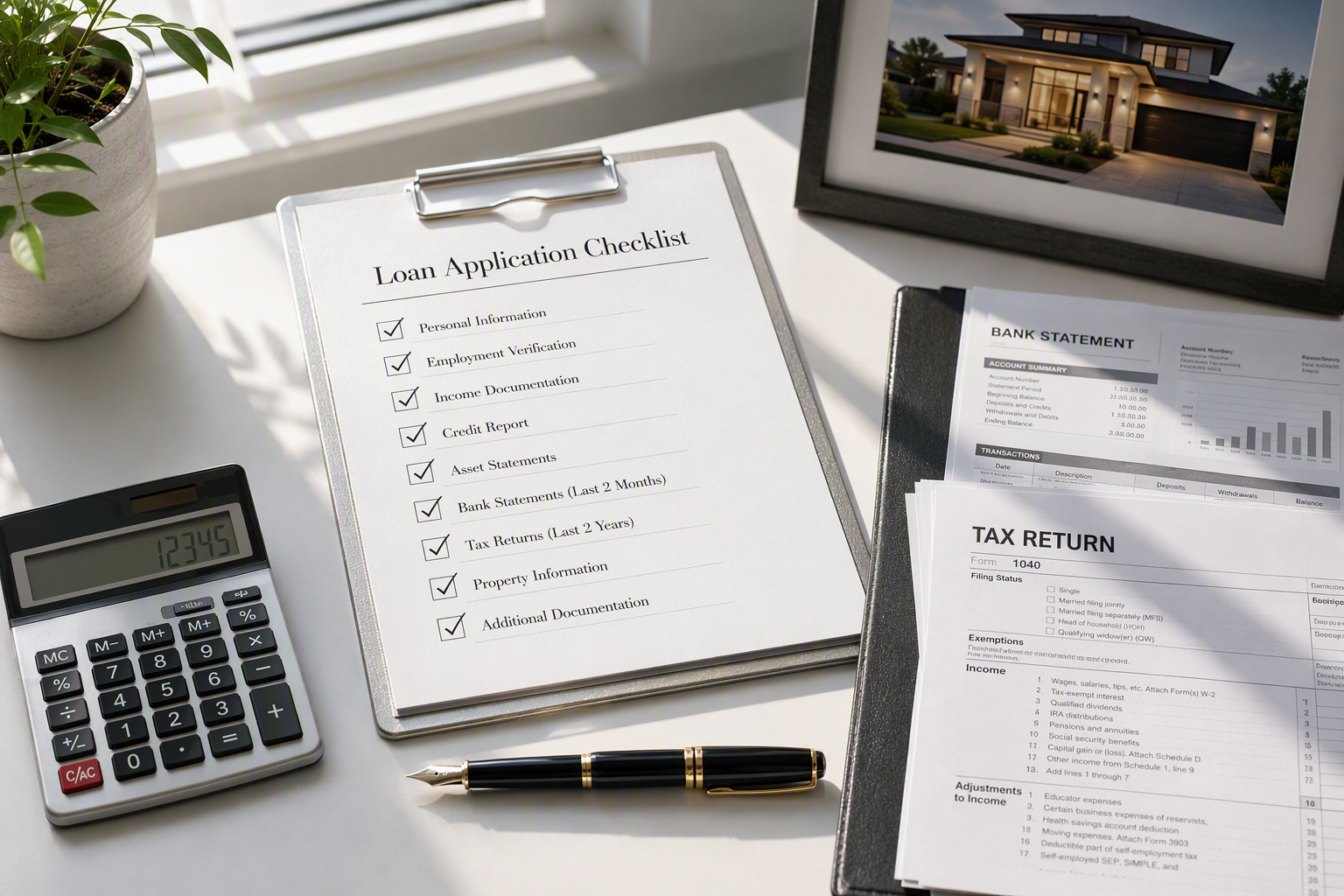
Investment Property Loan Application: Your Complete Document Checklist for 2026
Navigating the world of real estate investment can be both exhilarating and challenging. One of the most critical steps to securing your next successful deal is the loan application process. Without proper preparation, gathering the necessary investment property loan documents can be a daunting task, often leading to frustrating delays and even missed opportunities. In the fast-paced market of 2026, efficiency is key, and a well-organized application can be the difference between closing a deal quickly and watching it slip away.
This comprehensive guide is designed to empower real estate investors, house flippers, and developers by outlining the essential real estate financing requirements for various loan types, including hard money, bridge, and construction/rehab loans. We'll demystify the intricacies of the hard money loan application process, provide strategies for securing fast loan approval documents, and help you avoid common pitfalls that can stall your progress. Whether you're a seasoned investor or just starting, having a complete understanding of what lenders expect will give you a significant advantage. Get ready to streamline your financing journey and make 2026 your most profitable year yet.
Essential Documents for Every Investment Property Loan Application
A robust loan application begins with a solid foundation of essential documentation. While specific requirements can vary based on the lender and loan type, certain core documents are universally requested. Having these readily accessible and well-organized will significantly expedite your investment property loan documents submission process. Think of this as your universal toolkit for any real estate investment financing endeavor.
Personal Financials: Demonstrating Your Capability
Lenders need to assess your personal financial stability and track record. This usually includes:
- Bank Statements: Typically, the most recent 2-3 months of statements for all checking, savings, and investment accounts. These verify your liquidity and ability to cover initial costs and reserves.
- Tax Returns: Your federal tax returns (Form 1040) for the past 1-2 years. These provide a comprehensive overview of your income, deductions, and financial health.
- Credit Report & Score: While lenders will pull this themselves, understanding your current credit standing is crucial. A strong credit score demonstrates responsible financial management.
- Statements of Assets & Liabilities: A detailed breakdown of all your assets (other properties, retirement accounts, stocks) and liabilities (other mortgages, loans, credit card debt). This paints a full picture of your net worth.
- Personal Financial Statement (PFS): A standardized form summarizing all your financial data, often required by lenders for a quick snapshot.
Entity Documents: For Business-Managed Investments
If you're investing through an LLC, corporation, or other legal entity, additional documents will be required to verify its legitimacy and ownership structure:
- Articles of Organization/Incorporation: The founding documents filed with the state, establishing your business entity.
- Operating Agreement/Bylaws: These internal documents outline the management structure, ownership percentages, and operational procedures of your entity.
- Employer Identification Number (EIN) Letter: The official IRS confirmation of your business's tax ID.
- Business Bank Statements: Similar to personal statements, but for your business accounts, typically covering the last 2-3 months.
Property-Specific Details: The Investment Itself
Finally, the property you intend to finance is central to the application. Lenders need comprehensive information about the asset:
- Purchase Agreement/Sales Contract: The executed contract detailing the terms of the property acquisition.
- Appraisal Report: An independent valuation of the property's current market value. For rehab loans, an "as-is" and "after-repair value" (ARV) appraisal is often needed.
- Title Report & Insurance: Documentation confirming clear title to the property and insuring against potential title defects.
- Property Insurance Policy: Proof of hazard insurance for the property once the loan is closed.
- Photos of the Property: Current images of the property, both interior and exterior, providing a visual assessment of its condition.
Having these documents meticulously prepared and easily accessible is the first major step towards a smooth and swift loan approval process.
Streamlining Your Hard Money Loan Application for Faster Approvals
When time is of the essence, hard money loans often become the go-to financing solution for real estate investors. Known for their speed and flexibility, these loans require a slightly different approach to documentation compared to traditional bank loans. Mastering the hard money loan application process can significantly reduce your waiting time and help you capitalize on fleeting investment opportunities in 2026.
The Hard Money Advantage: Speed and Flexibility
Unlike conventional lenders that scrutinize personal income and credit scores, hard money lenders primarily focus on the asset itself – the investment property. This asset-based lending model allows for much faster underwriting and closing times, often within days or weeks, rather than months. They are ideal for fix-and-flip projects, bridge financing, or any situation where quick access to capital is paramount. Understanding this fundamental difference is key to knowing what documents to prioritize. For a deeper dive into how hard money lenders operate, explore our guide on Hard Money Lender vs. Broker: The Essential Guide for Real Estate Investors.
Tailoring Your Submission: What Hard Money Lenders Prioritize
While all essential documents listed earlier are generally required, hard money lenders place a heavier emphasis on documents that showcase the property's value and your exit strategy.
- Property Details and Investment Strategy: Clearly articulate your plan for the property. This includes your intended use (fix & flip, rental, new construction), projected holding period, and how you plan to repay the loan.
- Rehab Budget & Scope of Work: For fix & flip or rehab loans, a detailed breakdown of all renovation costs and a clear scope of work is critical. Lenders want to see that your budget is realistic and your plans will add significant value.
- After-Repair Value (ARV) Projections: Provide a well-researched ARV, supported by comparable sales in the area. This demonstrates the property's potential and secures the lender's investment.
- Experience & Track Record: While not always strictly documentation, providing a resume of past successful projects (if any) can significantly strengthen your application, especially for larger or more complex deals.
Proactive Communication and Digital Readiness
The speed of your hard money loan approval often hinges on how quickly and clearly you can communicate with your lender. Have all your fast loan approval documents organized digitally. Utilize cloud storage, digital signatures, and online submission portals to minimize delays. Be responsive to any additional information requests, as prompt replies keep the process moving. A lender's ability to quickly verify information directly correlates with the speed of your approval.
Avoiding Delays: Common Pitfalls & How to Prepare Effectively
Even with the right intentions, common mistakes in the real estate financing requirements process can lead to significant delays, increased costs, and even rejected applications. Proactive preparation is your best defense against these setbacks, ensuring your investment property loan application proceeds as smoothly as possible.
Incomplete Documentation: The Number One Culprit
The most frequent reason for delays is missing paperwork. Submitting an application with even one minor document absent can halt the entire process. Lenders cannot proceed to underwriting until all required information is gathered.
- Solution: Create a checklist (like this article!) and rigorously go through it. Don't assume a document isn't needed; if in doubt, ask your lender. Double-check expiration dates on any licenses or permits. FundMyEstate's online application portal is designed to guide you through the necessary fields, minimizing omissions.
Discrepancies and Inaccuracies: Building Trust
Any inconsistencies between different documents – such as varying income figures on tax returns versus bank statements, or conflicting ownership details – will raise red flags. Lenders perform due diligence, and discrepancies suggest a lack of attention to detail or, worse, an attempt to mislead.
- Solution: Review all your investment property loan documents meticulously before submission. Ensure names, addresses, income figures, and property details match across all submitted paperwork. If there's a legitimate reason for a discrepancy, be prepared to explain it clearly and provide supporting evidence.
Underestimating Due Diligence and Property Assessments
For investment properties, especially those requiring rehab, the lender's assessment of the property's current condition and its potential after improvements is crucial. Underestimating repair costs, overestimating after-repair value (ARV), or failing to secure proper inspections can lead to significant hurdles.
- Solution: Conduct thorough due diligence on the property. Obtain professional inspections, get detailed bids from contractors for rehab work, and generate realistic ARV projections based on solid comparable sales. Remember, lenders use their own appraisers and evaluators, so your projections should align with market realities. Building a strong real estate portfolio often involves strategic use of financing. Read more on this in Building Your Real Estate Portfolio with Bridge Financing: A Strategic Playbook.
Specific Documentation for Different Investment Loan Types
While the core documents remain consistent, various investment loan types – fix & flip, bridge, and new construction – each come with their own unique set of real estate financing requirements. Understanding these distinctions is critical for ensuring your investment property loan documents are tailored precisely to your project's needs.
Fix & Flip Loan Specifics: Detailing Your Rehab Strategy
Fix & flip loans are designed for investors who purchase distressed properties, renovate them, and then sell them for a profit. Lenders are particularly interested in the project's viability and your ability to execute the renovation.
- Detailed Scope of Work (SOW): A comprehensive plan outlining every step of the renovation, from demolition to finishes. This should specify materials, labor, and timelines.
- Line-Item Rehab Budget: A granular breakdown of all projected costs for the renovation. This budget is often tied directly to draw schedules, where funds are released as specific milestones are met.
- Contractor Bids/Quotes: If you're using contractors, provide their estimates and credentials.
- After-Repair Value (ARV) Analysis: Crucial for demonstrating the property's potential market value once renovations are complete, often supported by comparable sales.
- Proof of Experience (if applicable): A track record of successful flips can significantly strengthen your application. For inspiration, check out Flip Success Stories 2026: Real-World Case Studies & Lessons Learned.
Bridge Loan Nuances: Your Exit Strategy is Key
Bridge loans provide short-term capital to "bridge" a financial gap, such as acquiring a new property before an existing one sells, or funding a project before long-term financing is secured. The primary focus here is on your credible exit strategy.
- Clear Exit Strategy Documentation: This is paramount. If you're selling an existing property, provide proof of listing, anticipated sale price, or a conditional sales contract. If you're refinancing into a long-term loan, show pre-approval or commitment letters from the permanent lender.
- Proof of Funds for Repayment: While the exit strategy is key, demonstrating sufficient liquid assets to make payments or to cover potential delays in your exit plan is also important.
New Construction Loan Requirements: Plans, Permits, and Projections
New construction loans finance the building of a property from the ground up. These are often the most complex due to the extensive planning and regulatory approvals involved.
- Architectural Plans & Blueprints: Detailed drawings of the proposed structure.
- Building Permits: Proof that all necessary local permits for construction have been obtained or are in process.
- Detailed Construction Budget & Schedule: A comprehensive budget outlining all costs from land acquisition to final landscaping, along with a realistic timeline for completion.
- Contractor Agreement: If using a general contractor, their contract, insurance, and licensing information.
- Feasibility Study/Market Analysis: Demonstrating the demand for new construction in the proposed location and validating projected sales prices.
Leveraging Technology for a Smooth Application Process
In 2026, technology plays a pivotal role in streamlining nearly every aspect of business, and real estate financing is no exception. Modern lenders, like FundMyEstate, have embraced digital solutions to make the investment property loan application process faster, more secure, and less cumbersome for investors. Leveraging these tools effectively can give you a significant advantage in securing your fast loan approval documents.
Digital Document Management: Organize for Efficiency
Gone are the days of binders full of physical paperwork. Today, successful investors maintain digital archives of all their financial and property documents.
- Cloud Storage: Utilize services like Google Drive, Dropbox, or OneDrive to securely store scanned copies of all your essential documents. This ensures they are accessible from anywhere, at any time, and can be easily shared.
- Naming Conventions: Implement a clear and consistent naming convention for your files (e.g., "JaneDoe_2025_TaxReturn.pdf", "LLC_OperatingAgreement.pdf"). This makes finding specific documents instantaneous.
- Secure Backup: Always have redundant backups of your digital files to prevent loss.
Online Application Portals: Your Gateway to Speed
Many contemporary lenders offer sophisticated online portals that allow you to complete your application, upload documents, and track its status in real-time. These platforms are designed to be intuitive and efficient.
- Guided Workflows: Online portals often guide you step-by-step through the application process, ensuring all required fields are completed and necessary documents are uploaded. This significantly reduces the chances of submitting an incomplete application.
- Secure Uploads: These portals are built with robust security measures to protect your sensitive financial information during transmission.
- Real-time Updates: Track the progress of your application, receive notifications for document requests, and communicate directly with your loan officer through the platform. This transparency and direct communication are invaluable for accelerating the process.
Secure Data Sharing: Protecting Your Information
When sharing sensitive financial information with your lender, always prioritize secure methods. Avoid sending documents via unsecured email.
- Encrypted Portals: Use the lender's provided secure upload portal. These are typically encrypted to safeguard your data.
- Password Protection: If you must send documents via email, always use password-protected PDFs and communicate the password separately via phone or a different secure channel.
- Read-Only Access: When possible, share documents with "read-only" permissions to prevent unintended alterations.
By embracing these technological advancements, you can significantly enhance the efficiency and security of your hard money loan application, leading to quicker approvals and smoother transactions. Ready to experience the difference? Start Your Loan Application Today!
Frequently Asked Questions About Investment Property Loan Applications
Q: How long does the approval process typically take for investment property loans?
A: The approval time varies significantly. For traditional investment loans, it can take 30-60 days. Hard money loans, however, are known for their speed, often closing in 7-14 days, sometimes even faster, depending on the completeness of your investment property loan documents and lender efficiency.
Q: Can I get an investment loan with bad credit?
A: While traditional lenders are highly credit-score dependent, hard money lenders are typically more flexible. They focus more on the asset's value and your project's profitability than on personal credit scores. A lower credit score might result in slightly higher interest rates or points, but it won't necessarily prevent you from securing financing if your deal is strong.
Q: What's the difference between a hard money loan and a conventional loan for investment property?
A: The main difference lies in the lending criteria and speed. Conventional loans are offered by traditional banks, based heavily on the borrower's creditworthiness, income, and DTI, with longer approval times. Hard money loans are private loans, asset-based (focused on the property's value), have faster approvals, and are more flexible, making them ideal for short-term, high-potential projects like fix & flips.
Q: Do I need to have a property under contract to apply for a loan?
A: Generally, yes. Most lenders require a fully executed purchase agreement or sales contract for the specific property you intend to finance before they can process your investment property loan application. This document provides crucial details about the property and the terms of the acquisition, which are essential for underwriting.
Conclusion
Securing financing for your real estate investments in 2026 demands not just capital, but also meticulous preparation and a strategic approach to documentation. This complete checklist of investment property loan documents is designed to equip you with the knowledge and tools to navigate the hard money loan application process with confidence. By understanding the core real estate financing requirements, avoiding common pitfalls, and leveraging technology, you can significantly streamline your journey towards fast loan approval documents.
At FundMyEstate, we understand the dynamic nature of real estate investment and the critical need for fast, flexible financing. Our goal is to empower investors like you to seize opportunities quickly and efficiently. With your documents in order and our streamlined process, your next successful project is closer than you think. Don't let paperwork be the bottleneck to your portfolio growth.
Ready to take the next step? Apply for Your Investment Property Loan Today!