FundMyEstate Blog
Fix and Flip — Maximizing Returns on Your Rehab Projects
Discover proven strategies for maximizing returns on fix and flip real estate investments. From deal analysis to renovation planning and exit strategies.
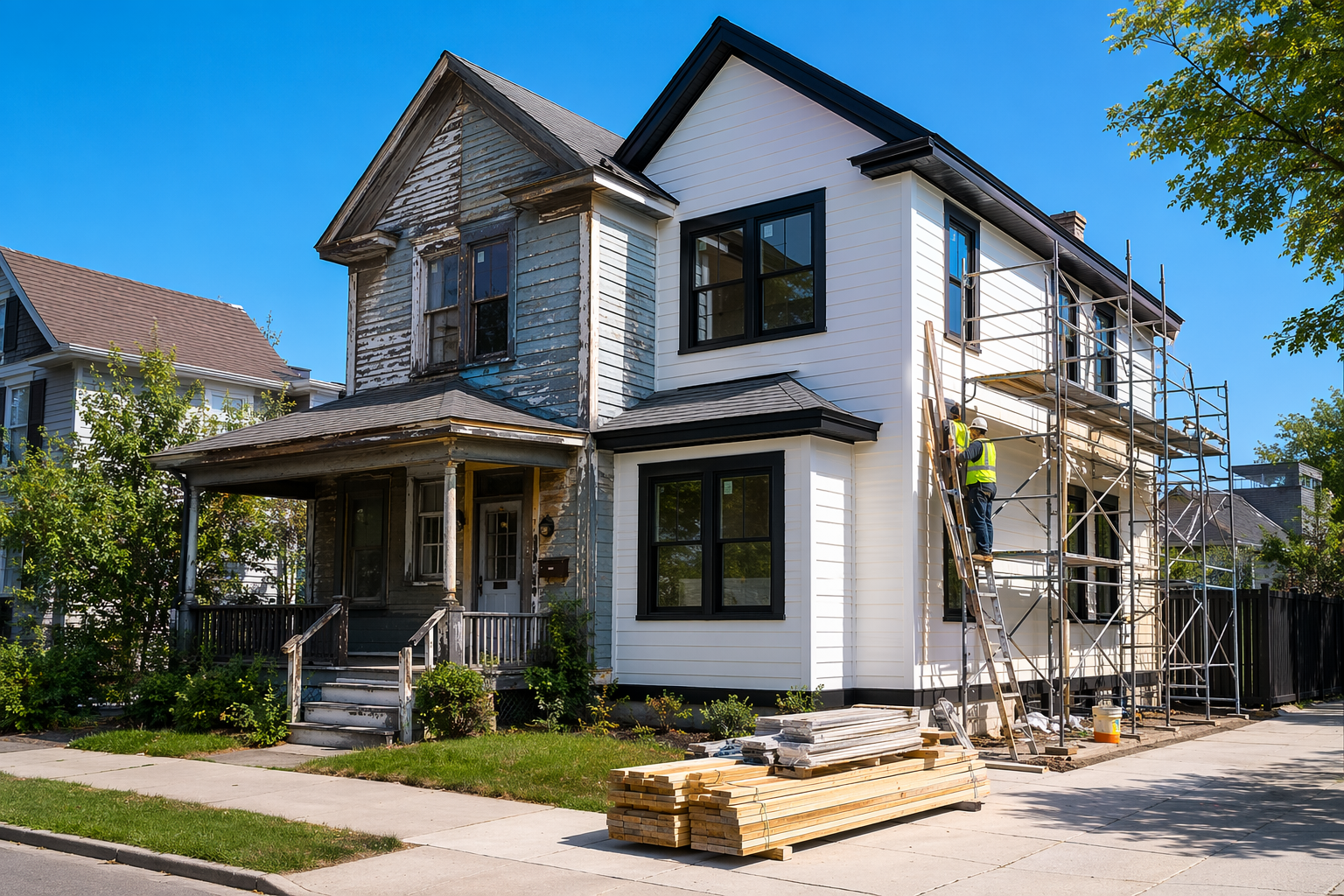
Fix and Flip — Maximizing Returns on Your Rehab Projects
Fix and flip investing remains one of the most popular strategies for real estate investors looking to generate significant returns in a relatively short timeframe. The concept is straightforward: purchase a distressed property, renovate it, and sell it for a profit. But execution is everything. The difference between a flip that nets $50,000 and one that loses money comes down to deal analysis, renovation discipline, financing choices, and project management.
In this guide, we will walk through every stage of a successful fix and flip — from finding the right property to closing the sale — so you can maximize your rehab investment returns.
What Is Fix and Flip Investing?
A fix and flip is a short-term real estate investment strategy where an investor purchases a property below market value, makes targeted improvements to increase its worth, and sells it at a higher price. The "fix" refers to the renovation work; the "flip" refers to the quick resale. Most flips are completed within 3 to 12 months from purchase to sale.
The strategy works because distressed properties — those facing foreclosure, suffering from deferred maintenance, or burdened by estate or tax issues — trade at a discount. By injecting capital and labor, you close the gap between the as-is value and the after-repair value (ARV).
The 70% Rule and Deal Analysis
The 70% rule is the foundational formula for evaluating flip deals. It states that you should never pay more than 70% of a property's ARV minus the estimated repair costs.
Maximum Purchase Price = (ARV × 0.70) − Repair Costs
Example
If a property's ARV is $300,000 and repairs are estimated at $40,000:
- Maximum purchase price = ($300,000 × 0.70) − $40,000 = $170,000
The 30% margin between your all-in cost and the ARV covers holding costs (taxes, insurance, loan interest), closing costs on both the purchase and sale, agent commissions, and your profit. If the numbers do not work at 70%, either negotiate the price down or walk away.
Beyond the 70% Rule
The 70% rule is a screening tool, not a substitute for a full deal analysis. Before committing, build a detailed budget that includes:
- Acquisition costs: Purchase price, closing costs, title insurance, inspection fees
- Renovation costs: Materials, labor, permits, and a 10–20% contingency reserve
- Holding costs: Property taxes, insurance, utilities, HOA fees, and loan interest for every month you own the property
- Disposition costs: Agent commissions (5–6%), buyer concessions, staging, and closing costs
Only after tallying every line item will you know your true projected profit.
Finding the Right Properties
Profitable flips start with the right property. Here is where to look:
- MLS listings: Search for properties listed below comps, with keywords like "TLC," "as-is," or "handyman special."
- Auctions and foreclosures: County tax sales, HUD homes, and bank-owned (REO) properties often trade at significant discounts.
- Direct mail and driving for dollars: Target absentee owners, inherited properties, and pre-foreclosures with personalized outreach.
- Wholesalers: Wholesalers contract properties at a discount and assign the contract to you for a fee. The deal must still pass your 70% rule after the assignment fee.
- Networking: Real estate investment groups, landlord associations, and contractor referrals can surface off-market deals.
Focus on neighborhoods with rising values, low days-on-market, and strong school districts. A great deal in a weak area is still a bad deal.
Renovation Planning
Renovation is where profits are made — or lost. A disciplined approach keeps your budget intact and your timeline on track.
High-ROI Improvements
Not all renovations are created equal. Prioritize improvements that buyers notice and value:
- Kitchen updates: New countertops, modern cabinets, stainless appliances, and updated lighting deliver the highest ROI of any single room.
- Bathroom remodels: Clean, modern fixtures, new tile, and updated vanities rank second.
- Curb appeal: Fresh paint, landscaping, a new front door, and clean walkways create a strong first impression that drives offers.
- Flooring: Replace worn carpet with hard-surface flooring (LVP, hardwood, or tile) throughout.
- Paint: A fresh coat of neutral paint is the cheapest, highest-impact improvement you can make.
Budgeting and Contingency
Always build a contingency reserve of 10–20% above your renovation estimate. Unexpected issues — mold, structural damage, outdated electrical — are the norm, not the exception, in distressed properties. If you do not use the contingency, it becomes profit. If you need it and do not have it, the project stalls.
Timelines
A typical cosmetic flip takes 4–8 weeks of renovation. A gut rehab can take 3–6 months. Build your holding cost budget around a realistic timeline, then add a buffer. Every extra month of holding costs erodes your profit.
Financing Your Flip
Most investors do not pay cash for flips. Financing options include:
- Hard money loans: The most common flip financing. Asset-based, fast closing (5–14 days), interest-only payments, terms of 6–18 months. Rates typically range from 10–16% with 1–3 point origination fees. The property qualifies, not your credit score.
- Rehab loans: These combine the purchase price and renovation costs into a single loan with a draw schedule. Funds for repairs are released as work is completed and inspected. This structure ensures you have capital for every phase of the project. Learn more about rehab financing options.
- Private money: Loans from individual investors or friends/family. Terms are negotiable and can be more favorable than hard money, but relationships are on the line.
- HELOC: If you have equity in another property, a home equity line of credit can provide flexible, lower-cost capital — but your primary residence is at risk.
Choose financing that matches your timeline and risk tolerance. The cost of capital is a line item in your deal analysis — factor it in before you commit.
Managing Contractors
Your contractor can make or break your flip. Follow these principles:
- Get multiple bids: Never accept the first bid. Compare at least three contractors on price, timeline, references, and communication.
- Use written contracts: Every scope of work, payment schedule, and deadline should be in writing. Verbal agreements lead to disputes.
- Pay on milestones: Tie payments to completed milestones (demolition done, rough-in complete, final inspection passed). Never pay the full amount upfront.
- Inspect regularly: Visit the site at least weekly. Catch problems early while they are still inexpensive to fix.
- Verify licenses and insurance: Confirm your contractor is licensed in your jurisdiction and carries general liability and workers' compensation insurance.
Common Mistakes to Avoid
- Overpaying for the property. If the deal does not meet the 70% rule, do not force it. There will be another deal.
- Underestimating repair costs. Get professional estimates, not guesses. Always include a contingency reserve.
- Over-improving for the neighborhood. A $100,000 kitchen in a neighborhood where homes sell for $200,000 will not return your investment. Match the standard of comparable homes.
- Ignoring holding costs. Every month you own the property, you pay taxes, insurance, interest, and utilities. Budget for 2–3 months longer than your estimated timeline.
- Choosing the cheapest contractor. Low bids often mean corners are cut, timelines slip, and you spend more fixing substandard work.
- Skipping permits. Unpermitted work can halt your sale, trigger fines, and scare off buyers who request inspection reports.
Exit Strategies
Always have a backup plan:
- Sell at retail: The primary strategy. List with an agent, stage the property, and market aggressively.
- Rent and refinance: If the market softens or your renovation takes longer than expected, rent the property and refinance into a longer-term loan to pay off your short-term financing.
- Wholesale the contract: If the deal no longer makes sense after inspection, assign your contract to another investor for a fee before closing.
- Sell to another investor: If you cannot complete the renovation, sell the property as-is to another flipper at a modest markup.
Tax Considerations
Flip profits are generally taxed as ordinary income, not capital gains, because the IRS views flipping as a business activity rather than a passive investment. Key points:
- Short-term capital gains: If you hold the property less than one year, profits are taxed at your ordinary income rate.
- Self-employment tax: If flipping is your primary business, profits may also be subject to self-employment tax (15.3%).
- Entity structure: Many flippers operate through LLCs or S-Corps to manage liability and optimize tax treatment. Consult a tax professional before your first flip.
- 1031 exchanges: These generally do not apply to flips because the property is held for sale (inventory), not investment. Do not assume you can defer taxes with a 1031 exchange on a flip.
Ready to Maximize Your Flip Returns?
Fix and flip investing rewards preparation, discipline, and speed. By running rigorous deal analysis, budgeting conservatively, choosing the right financing, and managing your project tightly, you can consistently generate strong returns on your rehab projects.
If you are ready to fund your next flip, explore rehab financing options at FundMyEstate. Apply now and get pre-qualified in as little as 24 hours — so you can close on your next deal before someone else does.